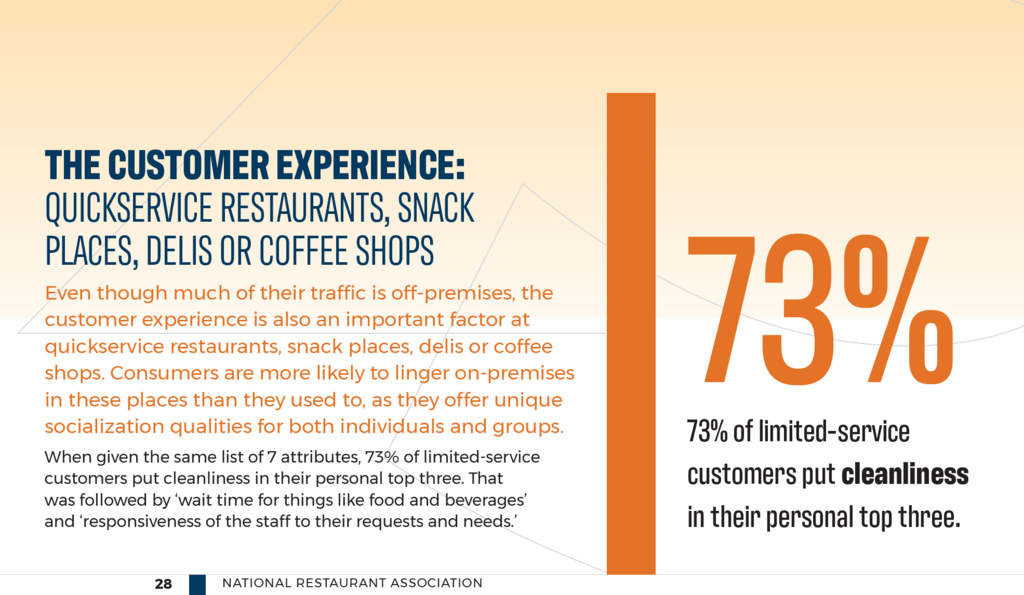
According to the National Restaurant Association’s 2025 State of the Industry Report, 73% of limited-service (QSR) customers cite store cleanliness as a primary factor in choosing to visit. For nearly half (47%) of these diners, the overall experience—led by cleanliness and hospitality—is more important than the price of the meal.
Research published in the International Journal of Hospitality & Tourism Management using the S-O-R (Stimulus-Organism-Response) Model found that perceived cleanliness accounts for 42% of overall restaurant satisfaction. This satisfaction is the direct "stimulus" that drives a customer’s intent to return.
Source: The impact of perceived cleanliness on customer satisfaction - ResearchGate
A fundamental principle in hospitality management is that customers use visible "mechanical clues"—specifically floors and restrooms—as a proxy for food safety. If the "tangible" floor appears dirty or sticky, customers assume the "intangible" kitchen is equally unhygienic.
Source: Customer Perceptions of Restaurant Cleanliness: A Cross Cultural Study - VTechWorks
Research archived in PubMed (NCBI) highlights that same-level falls are the leading cause of injury in restaurants. The study found that traditional damp mopping is often inefficient, while "two-step mopping" or professional-grade mechanized cleaning significantly improves floor friction and reduces slip-and-fall incidents.
Source: Improving cleaning procedures to make kitchen floors less slippery - PubMed
A 2025 study in ResearchGate comparing ATP (Adenosine Triphosphate) readings to consumer perception found that while customers are good at spotting "clean" areas, they are highly sensitive to "dirty" areas. The presence of "shiny surfaces" and the absence of odors are the two strongest visual cues that build consumer trust in a QSR's sanitation.
Source: The cleanliness of restaurants: ATP tests vs consumers' perception - ResearchGate
Quick-service restaurants (QSRs) operate in an environment defined by speed, volume, and constant customer flow. Yet many brands continue to rely on conventional floor-cleaning systems designed for a slower, less demanding era. These outdated mopping methods struggle to deliver consistent hygiene, visual cleanliness, or operational efficiency in today’s high-turnover foodservice environments.
This insightful content examines the operational, brand, and revenue impact of legacy floor-cleaning practices in QSRs—and outlines why modern, time-efficient cleaning systems should be viewed not as a cost, but as a strategic investment in brand protection and customer experience.
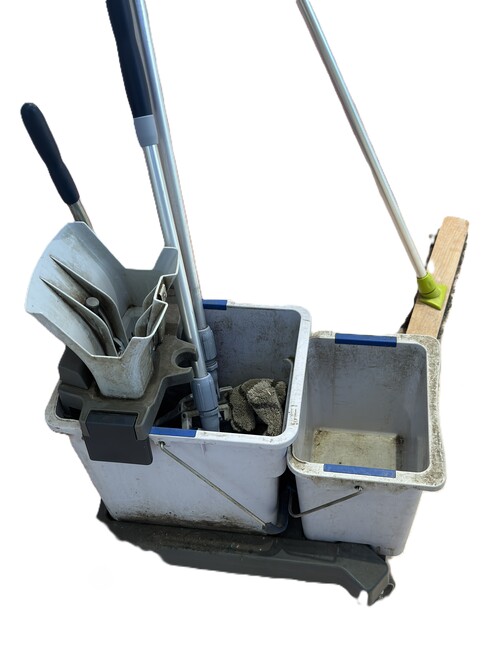
In a fast-paced quick-service restaurant environment, staff simply do not have the time to pre-clean dirty mops, prepare contaminated mop buckets, or manage excess water and long drying times during service hours.
Modern floor-cleaning systems are specifically designed to eliminate these challenges, enabling floors to look clean, shiny, and fresh in just a few minutes without disrupting operations or compromising hygiene standards.
While innovative cleaning technologies are often misclassified as operational cost centres, they in fact serve as powerful brand reputation safeguards, enhance the customer experience, and enable consistent hygiene compliance.
Viewed through this lens, advanced floor-cleaning solutions represent a strategic marketing and brand-protection investment that supports revenue growth, customer loyalty, and long-term brand equity.
Legacy floor-cleaning methods—manual mops, buckets, and inconsistent processes—were never designed for today’s high-speed, high-traffic environments. They spread soil rather than remove it, rely heavily on operator technique, consume excessive water, and deliver inconsistent hygiene results. Most critically, they slow operations and undermine brand perception in customer-facing spaces.
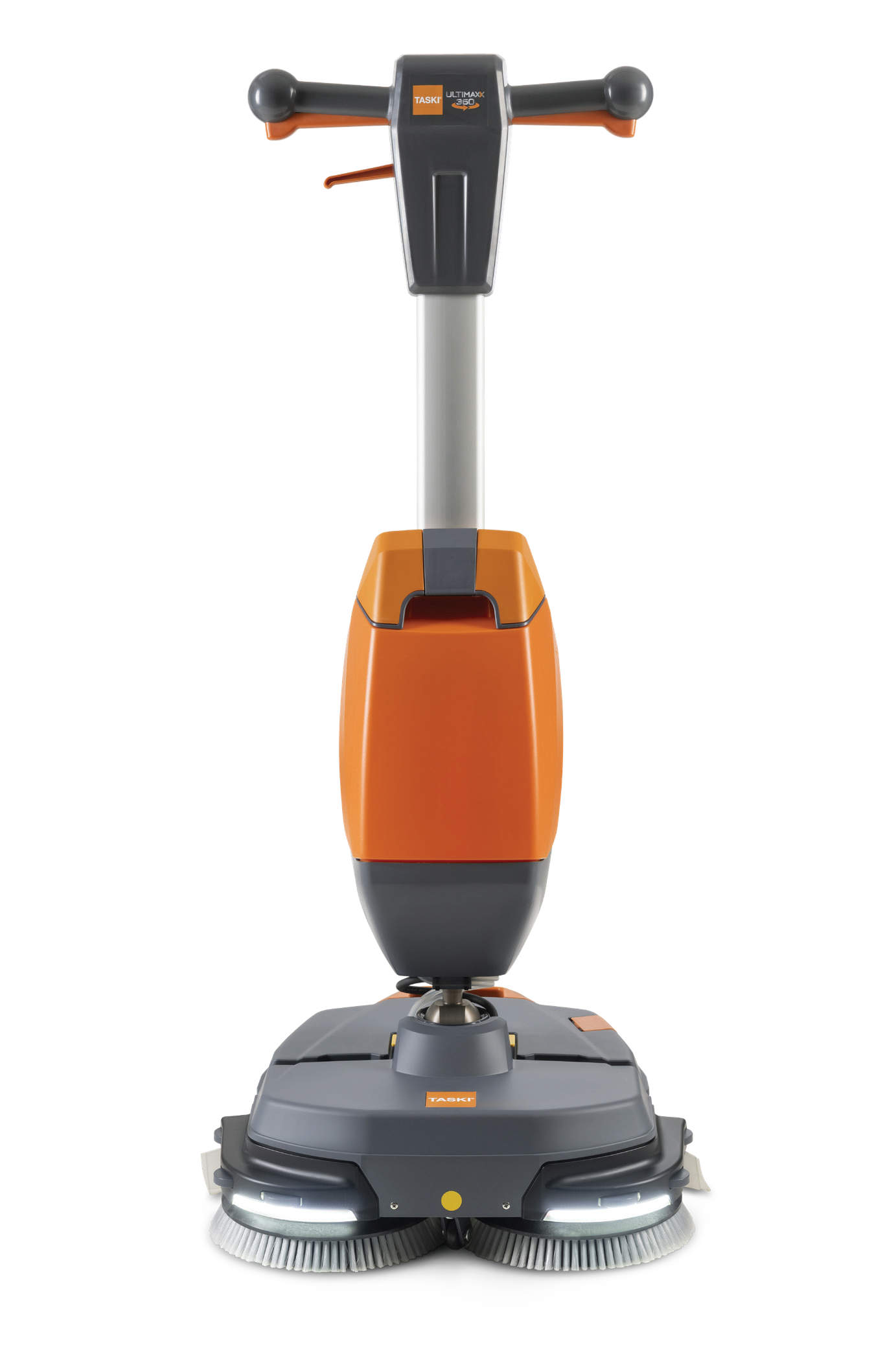
TASKI ULTIMAXX 360 replaces outdated mopping with professional-grade, mechanised floor cleaning, purpose-built for modern operations that demand speed, consistency, and visible results.
| # | Criteria | Outdated Mopping Systems | TASKI ULTIMAXX 360 |
|---|---|---|---|
| 1 | Cleaning Effectiveness | Often spreads dirt rather than removing it, resulting in inconsistent hygiene | Removes up to 5× more soil, delivering visibly cleaner and more hygienic floors |
| 2 | Drying Time | Long drying times increase slip risks and disrupt operations | Significantly reduced drying time with up to 99% water removal, safer for daytime cleaning |
| 3 | Operational Speed | Slow, labour-intensive, and difficult to perform during service hours | Cleans up to 1,470 m² per hour, ideal for fast-paced environments |
| 4 | Consistency of Results | Highly dependent on operator technique; inconsistent outcomes | Mechanised performance ensures consistent, professional-grade results every time |
| 5 | Access to Tight Spaces | Limited reach; ineffective in congested or hard-to-reach areas | 360° maneuverability and compact design clean under tables, counters, and tight zones |
| 6 | Ease of Use | Physically demanding; repetitive strain and fatigue common | Ergonomic design, balanced weight, intuitive controls—no training required |
| 7 | Hygiene Control | Reused mops and buckets increase cross-contamination risks | IntelliBac® antimicrobial technology reduces bacterial growth by up to 99.99% on key surfaces |
| 8 | Water Consumption | High water usage with inefficient soil removal | Uses up to 30% less water than traditional mopping |
| 9 | Energy Efficiency | No energy optimisation | Digital motors deliver up to 30% energy savings |
| 10 | Sustainability | Disposable consumables and high water waste | Built with recycled plastic components and designed for longer lifespan |
| 11 | Brand & Customer Perception | Dull, wet floors negatively impact first impressions | Visibly cleaner, shinier floors enhance brand perception and guest experience |
| 12 | Long-Term Value | Appears low-cost but drives inefficiency and inconsistency | Strategic investment in productivity, hygiene compliance, and brand protection |
Unlike bulky scrubbers or inefficient manual tools, the ULTIMAXX 360 features 360° manoeuvrability, a 49 cm working width, and a compact, lightweight design, allowing staff to clean under tables, around counters, and in congested areas with ease
With a 4L fresh-water tank capable of cleaning up to 360 m² per fill and a productivity rate of 1,470 m² per hour, the ULTIMAXX 360 dramatically reduces cleaning time while increasing coverage—something legacy mopping simply cannot achieve
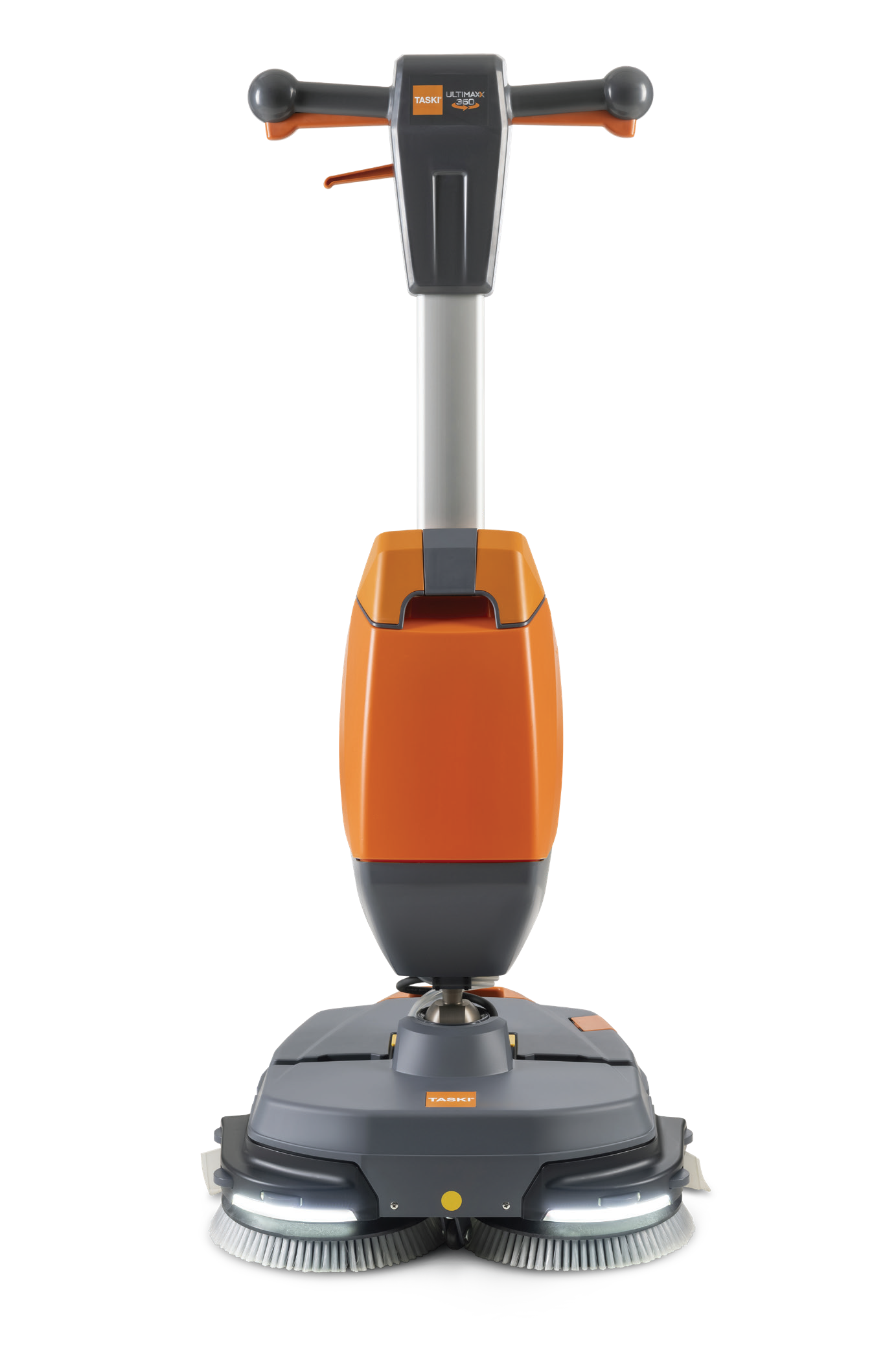
Legacy cleaning systems place physical strain on staff and require extensive training. ULTIMAXX 360 is engineered differently.
Ergonomic handle and balanced weight distribution reduce operator fatigue
Intuitive, three-step start-up enables immediate use—even for inexperienced staff
Low centre of gravity ensures smooth, controlled operation in busy environments
This makes consistent, high-quality cleaning achievable across all shifts and staff levels
ULTIMAXX 360 integrates advanced TASKI technologies that go far beyond manual cleaning:
These features ensure reliable hygiene outcomes that manual systems cannot replicate.
While legacy mopping wastes water and shortens floor life, ULTIMAXX 360 is engineered for sustainability:
This makes sustainability a built-in operational advantage—not an added burden.
While classic mopping systems may seem inexpensive at purchase, their true cost of ownership is high—driven by labour inefficiency, inconsistent hygiene, water waste, and negative brand impact.
TASKI ULTIMAXX 360 shifts the equation from short-term cost avoidance to long-term value creation by:
The result is a measurable return on investment that extends well beyond cleaning—supporting operational efficiency, customer loyalty, and sustainable growth.

KvK: 92602290
BTW: NL004968846B78
Smaragd 2, 2371LA
Roelofarendsveen, Netherlands
+31645886235
2025 Glowex